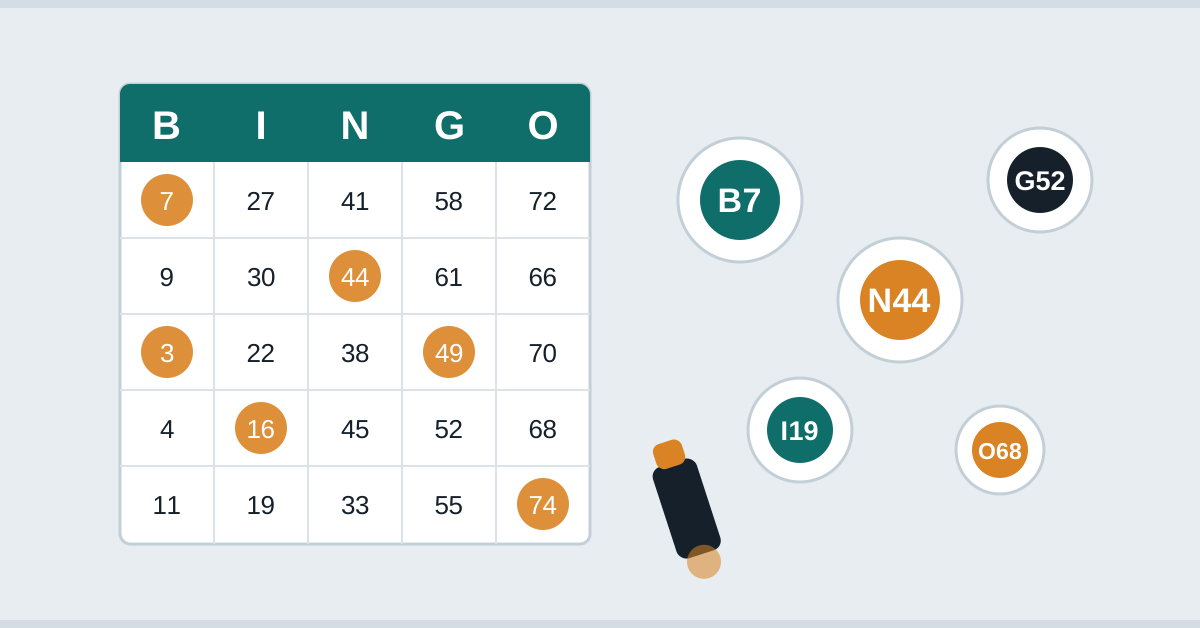
A bingo night has one enemy, and it is not the equipment — it is drift. Games take longer than planned, prize handovers turn into conversations, and by game nine the room has thinned out. Everything below is really about protecting the clock.
How long the evening actually takes
Budget six to nine minutes per standard game once you include selling the room on the pattern, calling, verifying the winner and handing over the prize. A fifteen-game evening is therefore not ninety minutes; it is closer to two hours with a short break, and that is before anyone makes a speech.
If you have a hard finish — a hall that locks at ten, a school night — work backwards from it and cut games rather than rushing the ones you keep. Nine unhurried games beat fifteen that feel like a queue.
| Part of the evening | Realistic time |
|---|---|
| Doors, seating, selling cards | 30–40 minutes |
| Explaining rules and patterns | 5 minutes |
| Each standard game | 6–9 minutes |
| Break (raffle, food, restrooms) | 15 minutes |
| Final blackout game | 12–18 minutes |
The equipment that actually matters
A microphone. This is the single biggest difference between a good night and a frustrating one. In any room over about forty people, an unamplified caller will lose the back rows, and the back rows will start talking, which loses the middle rows. If the venue has no system, this is the first thing to rent.
A visible display of called numbers. A flip board, a projector, even a second person writing on a whiteboard. Without it, every game pauses three times while someone asks whether B7 has gone.
A cage and balls, or a verified electronic caller. Both are fine. What matters is that the room can see the draw is honest — which is why a cage in plain view beats an app on someone's phone, whatever the app does.
Enough daubers. Buy more than you think and treat them as consumable. Nothing stalls a room like sharing three markers across a table of eight.
If the evening raises money
Charitable bingo in Texas is licensed and regulated by the Texas Lottery Commission's Charitable Bingo Operations Division, and the rules cover who may run games, how prizes and proceeds are handled and what has to be reported. A school or church fundraiser is not automatically exempt because it is small or well-intentioned. Check the current requirements with the Commission before you set a date — the answer shapes your prize structure, and it is a bad thing to discover afterwards.
Prizes: fewer and better
The instinct is to have a prize for every game. In practice a long tail of small prizes makes the middle of the evening feel flat, and it costs more in total than three or four prizes people actually want. Concentrate the budget: a strong prize for the blackout, two decent ones mid-evening, and small tokens elsewhere.
Announce the prize before each game, not after. It changes how many people buy an extra card, and it stops the deflating moment where a winner discovers they have won a mug.
Calling well
- Say the number twice, then the letter-number together: "Seven. Seven. B7."
- Leave three full seconds between calls. It feels far too slow to the caller and about right to everyone else.
- Never take a call back. If you misread a ball, announce the correction plainly and let the room re-check — arguing about it costs more time than restarting the game.
- Have a second person verify winning cards while you keep the room's attention. Verifying in silence is where evenings die.
Seating and the room
Eight-foot tables are usually sold as seating eight. For bingo, seat six. People need room for multiple cards, a drink and their elbows, and cramped players ask their neighbours to repeat numbers, which raises the noise floor for everyone.
Leave a genuine aisle down the middle. Someone will be walking prizes, cards and cash around all evening, and the alternative is squeezing past chairs while carrying a raffle basket.
The five-minute rehearsal
Before doors open, sit in the back corner while someone calls three numbers into the microphone. If you cannot hear them comfortably from there, the night has a problem, and you have twenty minutes to solve it rather than discovering it during game one.
Once the timing and the sound are settled, the rest is straightforward. The six-week checklist covers what to book and when, and before you rent anything covers the questions worth asking whoever supplies your tables and sound.